 Geeta-Kavita Collection of Hindi poems & articles
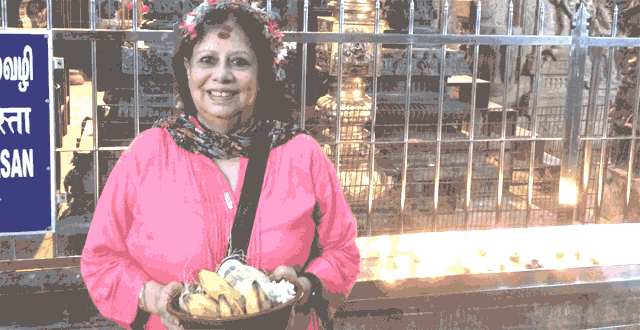
I was born in an Arya Samaji family and married a girl from strong Sanatani tradition. I describe how it enriched my life. Rajiv Krishna Saxena
From Arya Samaj to Sanatani Traditions: A Journey of Faith and Family:
Today marks the beginning of Navratri, culminating in Vijayadashami (Dussehra). This morning, my wife completed the traditional rituals, performing the morning puja and sowing the barley seeds (jamara) for the final day.
Growing up, my family followed the Arya Samaj—a reformist movement within Hinduism founded by Swami Dayanand Saraswati that rejects idol worship. We never visited temples. Instead, our faith was centered around occasional home havans, where we kids learned to recite Vedic shlokas.
Interestingly, my grandfather was a devout Sanatani. When we held havans, he would quietly retreat behind his newspaper. Yet, he was the one who lovingly took us kids to the mandir for Krishna Janmashtami and other festivals. Because Arya Samaj does not observe rituals like Shraddh, Navratri, or Lakshmi Pujan during Diwali, I didn’t inherit the core Sanatani traditions.
That changed when I married my wife, a Brahmin from Kathmandu raised in a deeply rooted Sanatani family. Nepali Hindus observe these rituals with immense dedication. After a long courtship while completing our PhDs at AIIMS, we built a beautiful life together, celebrating our Golden Wedding Anniversary just three days ago!
It is often the mother who anchors a family’s cultural traditions. Through my wife, I embraced the Sanatani way. I’ve realized that passing down Sanatani rituals—temple visits, prayers, pujas, and tikas—to children is so much natural. It is colorful, immersive, and joyful. By contrast, restricting faith to occasional havans can feel a bit dry and harder for the next generation to hold onto.
The Sanatani world is vibrant and festive. From Jagannath Yatras, Ramlila, and Ravan Dahan, to Karwa Chauth, Teej, Ganesh Chaturthi, and Durga Puja, the calendar is packed with celebration. In ancient India, and even today, these frequent festivals kept families connected. Beyond their deep spiritual meaning, they provided immense joy, community, and entertainment.
While the Vedic havans of Arya Samaj and the intellectual pursuits of Vedanta and Yoga Darshan are deeply rewarding for the individual mind, they lack the collective, colorful glee that involves family and friends. Looking back, I feel incredibly blessed and happy to have experienced this beautiful, vibrant tradition through my wife and her family from Kathmandu. Happy Navratri to all!
Prof. Rajiv K. Sxena
Oct 11, 2026
लिंक्स:
- कविताएं: सम्पूर्ण तालिका
- लेख: सम्पूर्ण तालिका
- गीता-कविता: हमारे बारे में
- गीता काव्य माधुरी
- बाल गीता
- प्रोफेसर राजीव सक्सेना
July/August 2026
लेखों की सम्पूर्ण तालिका
यादें भईया (डॉ धर्मवीर भारती ) की
मामा जी (डॉ धर्मवीर भारती): कुछ संस्मरण
कांग्रेस बनाम मोदीः एक युगपरिवर्तन
किसान आत्महत्याओं की वास्तविकता
तत्व चिंतन: भाग 1 – तत्व चिंतन की आवश्यकता
तत्व चिंतनः भाग 2 – भारतीय धर्मों की मूल धारणाएं
तत्व चिंतनः भाग 3 - कौन सा रस्ता लें?
तत्व चिंतनः भाग 4 – अच्छा क्या है बुरा क्या है?
तत्व चिंतनः भाग 5 – नई दुनियां, पुरानी दुनियां
तत्व चिंतन: भाग 6 – भारत कितना ज्ञानी कितना विज्ञानी
तत्वचिंतनः भाग 7– भाग्यशाली हैं आस्थावान